
Every campus has its quiet corners of truth, places where stories live beneath the surface, waiting for someone to ask, “How are you really experiencing this place?”. Stories That Connect Us began with that question from the “Let’s Talk Storytelling Series.” For this semester, I interviewed six Bucknell students: three African students and three African American students for my research project for the Griot Institute. Each conversation stretched for roughly thirty minutes, but the echoes lasted much longer. What emerged was a tapestry of experiences stitched with pride, tension, resilience, and a hunger for connection. Four themes rose again and again under different stories.
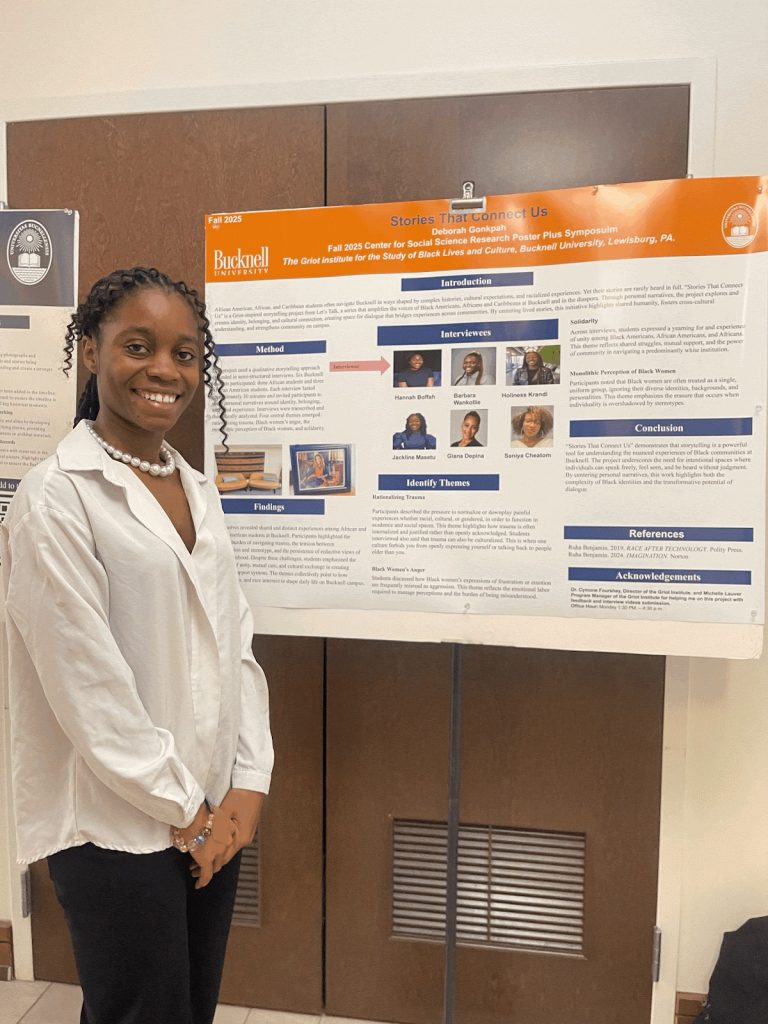
Rationalizing Trauma
Many students described learning to package their pain in ways that made it “bearable” for others. Whether confronting bias in the classroom or wrestling with cultural misunderstandings, they spoke of the pressure to downplay racialized or gendered harm just to move through the day. To survive, trauma was tucked into the quiet corners of their identity, smoothed over, or rationalized. In their words, healing often began only when someone finally listened.
Black Women’s Anger
Here, the stories thickened. Several participants talked about the emotional gymnastics required to express frustration without being mislabeled as “angry,” “aggressive,” or “intimidating.” They carried an emotional ledger—constantly weighing how their tone, volume, facial expression, or posture might be read.
Their anger wasn’t the problem; the misinterpretation was. And each story made clear how exhausting it can be to shrink emotions simply to avoid stereotypes.
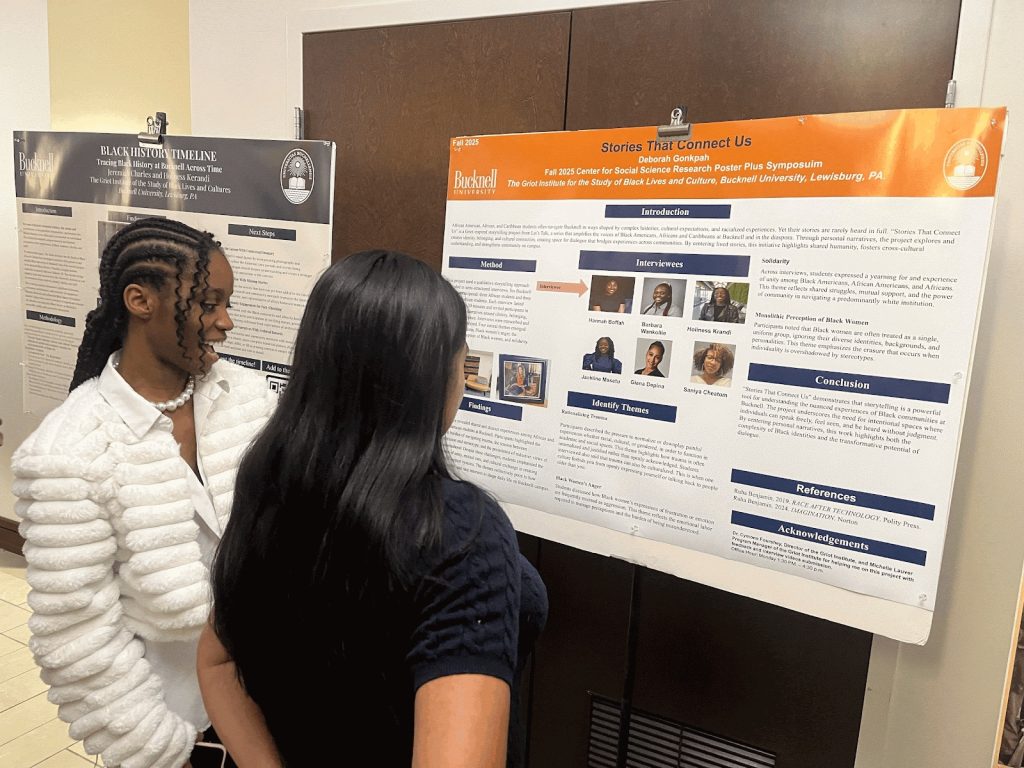
The Monolithic Perception of Black Women
Students pushed back against the idea that Black womanhood is a single, predictable shape. The interviews illuminated the diversity that exists within Blackness—differences in culture, upbringing, personality, ambitions, and ways of moving through the world. Yet too often, they felt flattened into a single storyline.
This theme revealed a deep hunger for nuance, visibility, and recognition of individuality.
Solidarity
Despite these challenges, there was a glowing thread: connection. Students talked about moments when the African and African American communities reached toward each other, sharing culture, humor, vulnerability, and support. Solidarity wasn’t always perfect, but it was powerful.
This theme emerged like a quiet promise: even with historical and cultural differences, there is room to build relational bridges—strong ones.
My Reflection
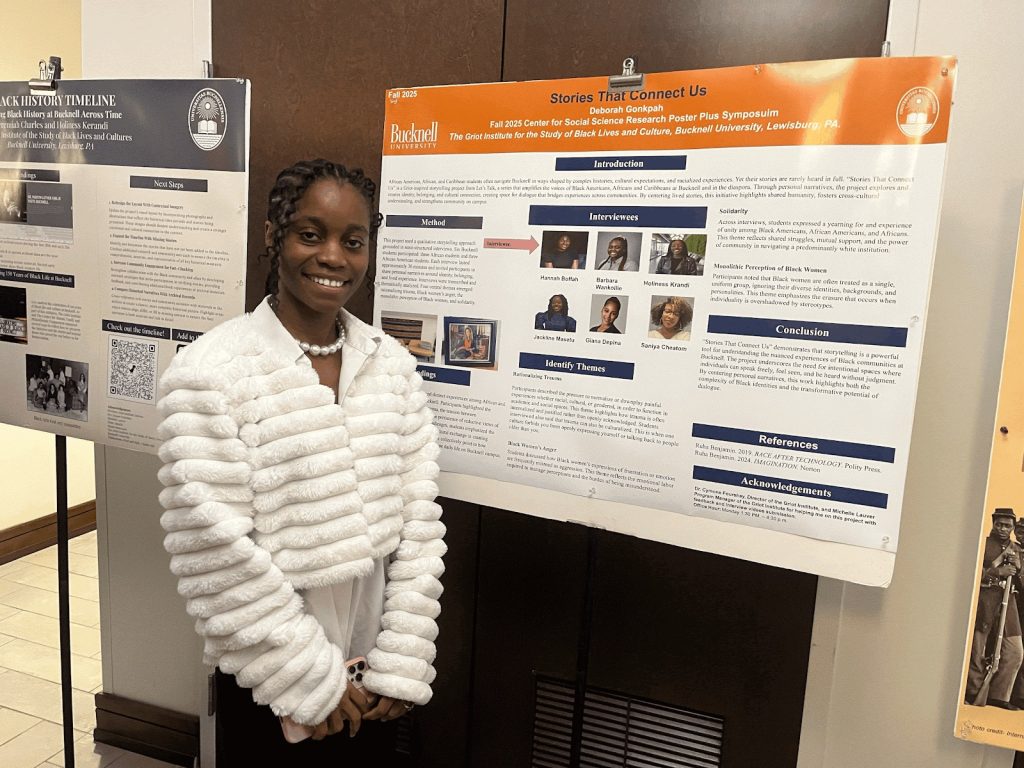
This semester has been one of the most engaging and meaningful experiences of my time at Bucknell. I had the privilege of listening to and learning from my interviewees, each of whom trusted me with stories that were honest, vulnerable, and deeply human. Alongside the research itself, I also enjoyed developing new skills—especially learning how to edit videos and transform raw narratives into powerful visual stories.
The Griot Institute became more than just a workspace for me; it became a community. It offered an educational and safe environment where laughter flowed easily for me, conversations were both insightful and funny, and late-night study sessions turned into moments of quiet focus and support. It was a place to think, create, rest, and simply be.
The poster symposium was a rewarding culmination of this journey. From preparing my materials to presenting my findings, I felt surrounded by encouragement. Michelle guided me throughout my interviews and research process, while Professor Fourshey helped me shape my ideas with clarity and intention. I am grateful for every lesson, every story shared, and every person who made this project meaningful.
-Debra Gonkpah